In February 2025, I joined a research initiative led by Dr. Kanu Priya Singh in the Interactive Design department at Kennesaw State University. The project, formally titled User-Centered Design and Development of an E-Mental Health Application with Cognitive Behavioral Therapy Tools for College Students, aims to design and develop a mobile application that supports college students' mental health and overall wellbeing.
The transition from high school to college introduces a unique set of pressures, from academic independence to social adjustment, that can significantly impact students' mental health. Many students face economic and social barriers that make accessing traditional mental health support difficult or unrealistic. A free, student-facing mobile application offered alongside existing campus resources could serve as a more accessible first step for students managing mild to moderate mental health concerns.
To ground the project in real student experiences, we used a user-centered design methodology that included participants from the very beginning. We conducted six focus groups and co-design workshops with 26 students who were either self- or school-diagnosed with mental health concerns, with mild to moderate symptoms measured by the PHQ-9 (depression) and GAD-7 (anxiety) scales. Simultaneously, we conducted stakeholder interviews with 14 participants, including faculty, staff, and counselors from the Psychological Center at Kennesaw State University.
My primary responsibility during this phase was analyzing the stakeholder interview transcripts to surface findings that would inform both the app's design and a forthcoming research publication. Using NVivo, I coded interview transcripts, identified key quotes, and developed thematic categories for the findings section.
I also contributed to the literature review, helping analyze over 40 research papers to establish an evidence base for the project's design decisions. Key themes that emerged from the stakeholder interviews included:
Parallel co-design sessions with students surfaced the following priority feature areas for the app:
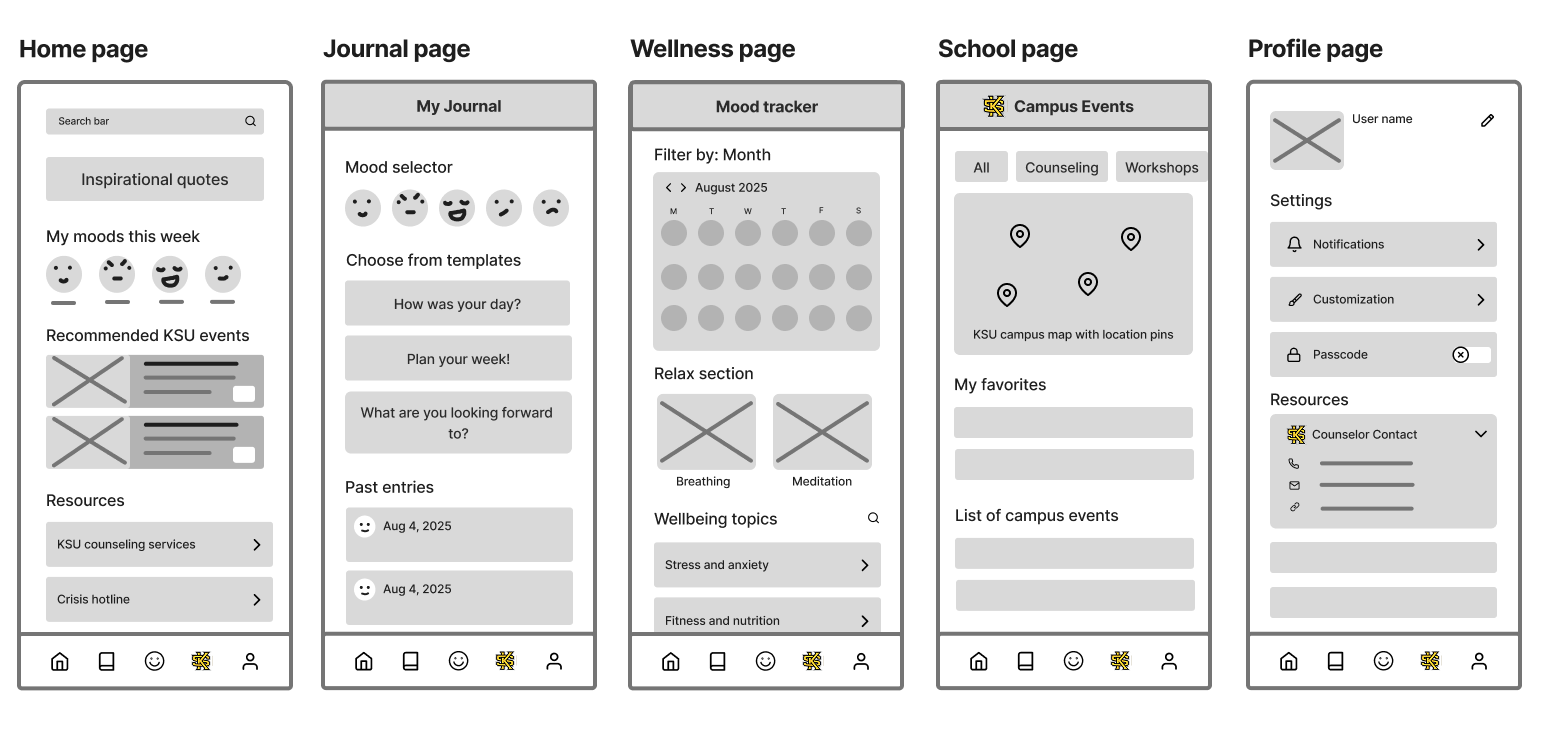
Using affinity mapping to synthesize research findings, one of the design assistants developed the first wireframe iteration. This was followed by a higher-fidelity second iteration, developed collaboratively by both designers.
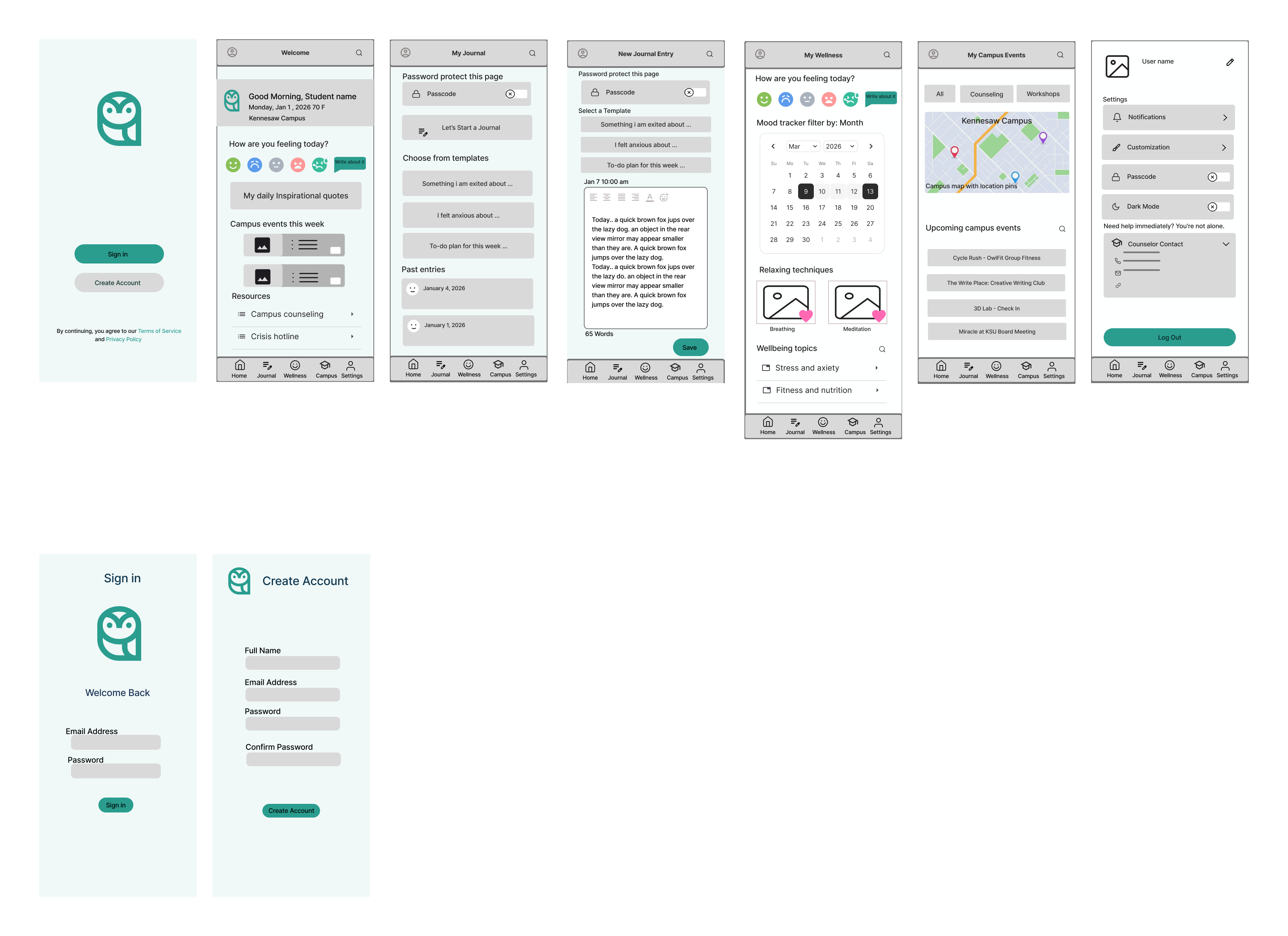
The second set of wireframes was presented to a subset of the original student participants in a follow-up focus group. Based on their feedback, I collaborated with one of the designers on a third iteration. My contributions included auditing color contrast for accessibility compliance, refining the color palette, and introducing more visually cohesive UI elements throughout the app.
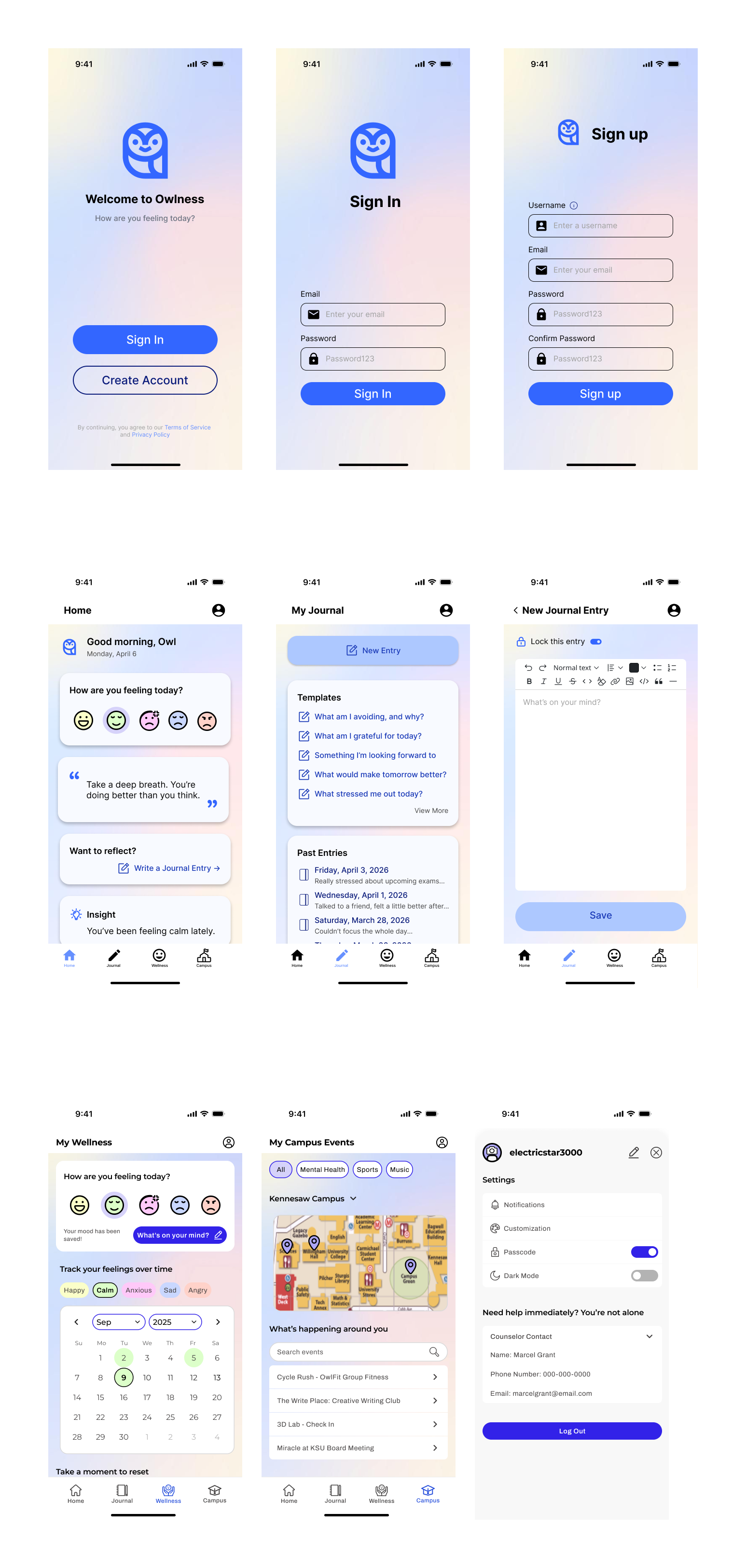
Following the design handoff, I worked closely with the developer to ensure design alignment and helped guide decisions during the build process. The app was developed using React Native and tested on mobile devices via Expo Go. Core features in this version include:
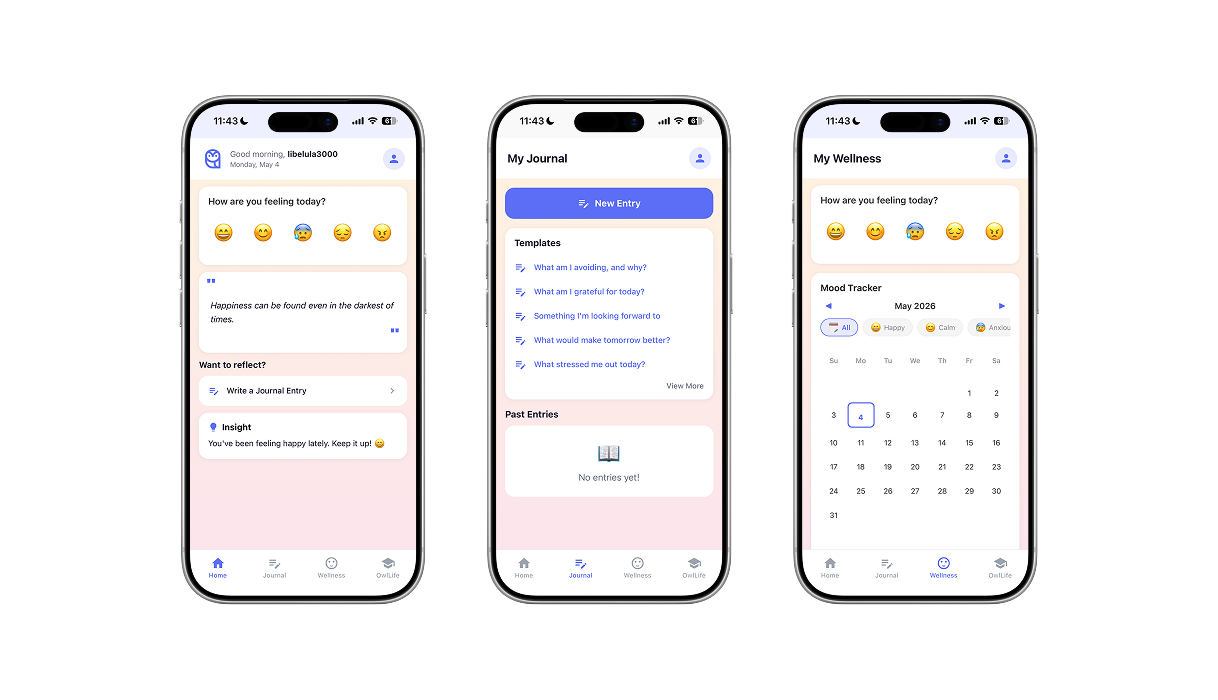
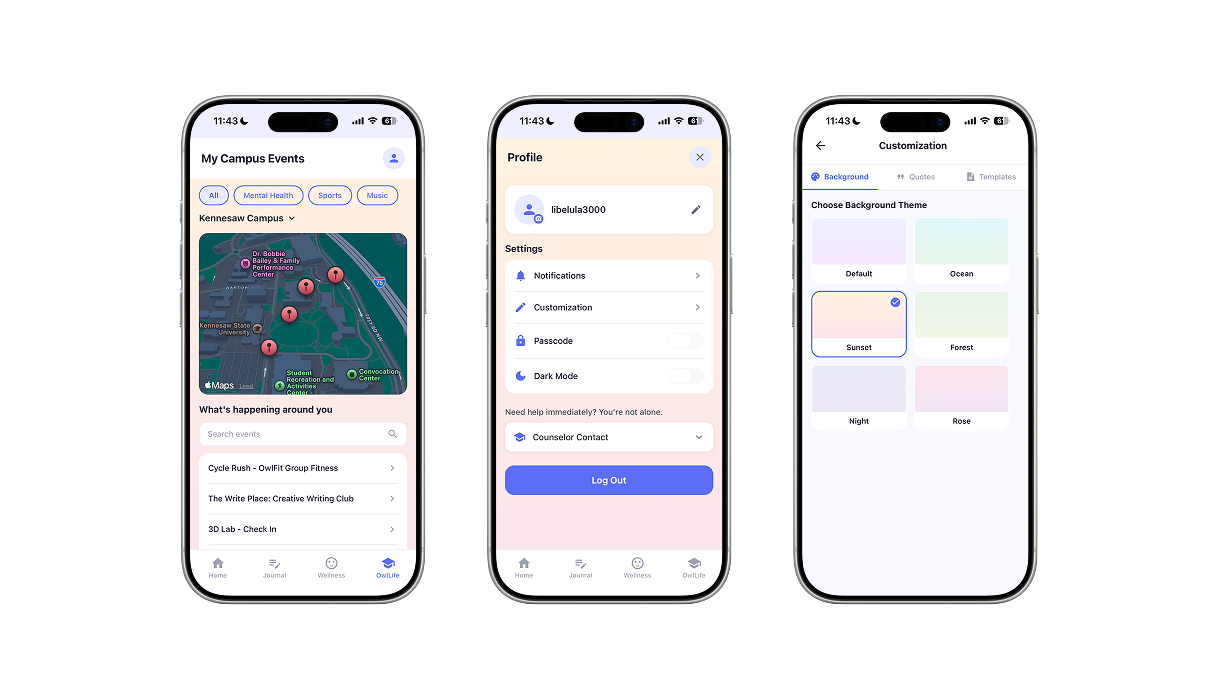
The first functional prototype addresses many of the core needs identified in our research:
One of the most consistent pieces of feedback across the focus group sessions was a strong preference for simplicity and straightforwardness. Students felt that a clean, uncluttered design would contribute to a calmer, more supportive experience, which has become a guiding principle for subsequent iterations.
To evaluate the first functional prototype, I developed the usability testing protocol, recruited participants, facilitated task-based usability sessions, and measured usability using the System Usability Scale (SUS). The study included seven participants, and I personally moderated six of the seven usability sessions.
Participants completed core tasks related to journaling, mood tracking, wellness resources, counseling support, and event discovery. Overall, users successfully completed the assigned tasks, demonstrating that the application's navigation and structure were generally intuitive. The prototype achieved a mean SUS score of 91.4, indicating excellent perceived usability.
While overall performance was strong, usability testing revealed four key areas for improvement: onboarding, resource accessibility, feature discoverability, and personalization. I used affinity mapping to synthesize recurring feedback and prioritize the next design iteration.
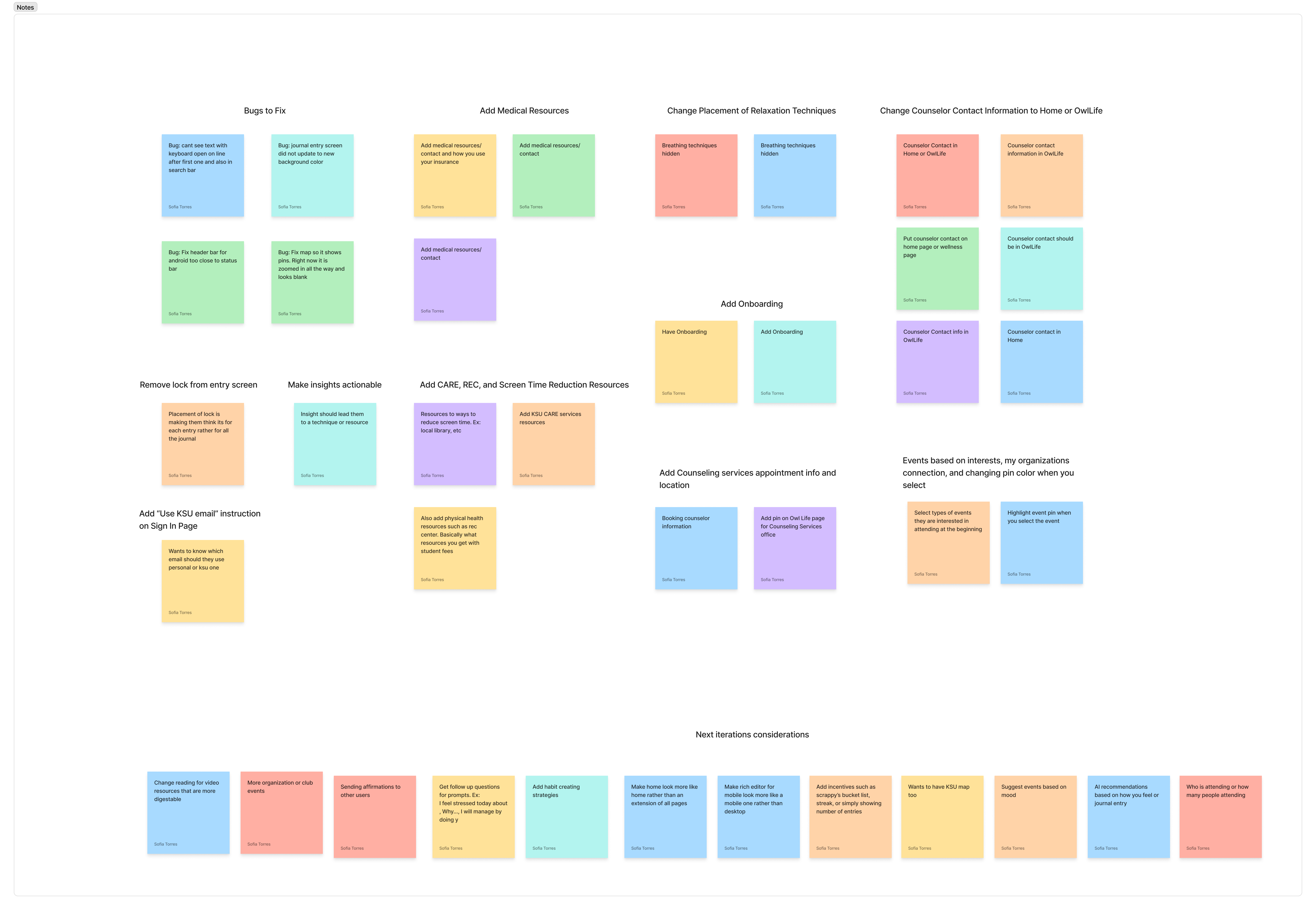
Based on these findings, I prioritized fixes and improvements according to their impact on the user experience.
Improved Onboarding
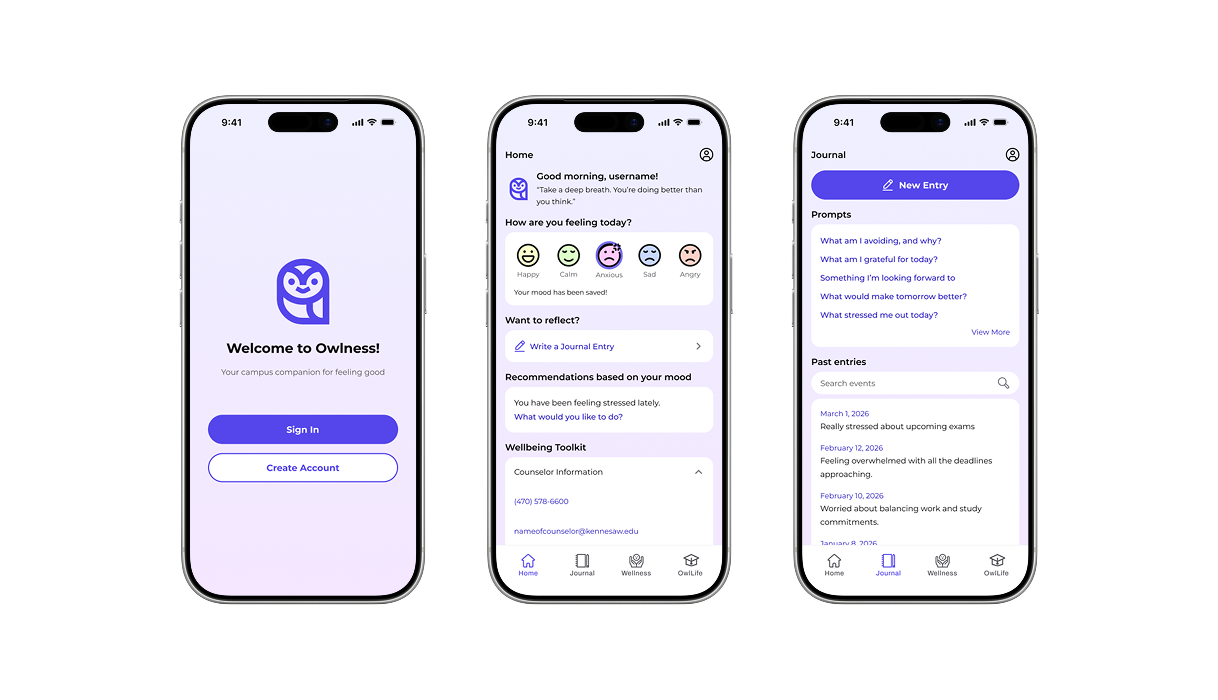
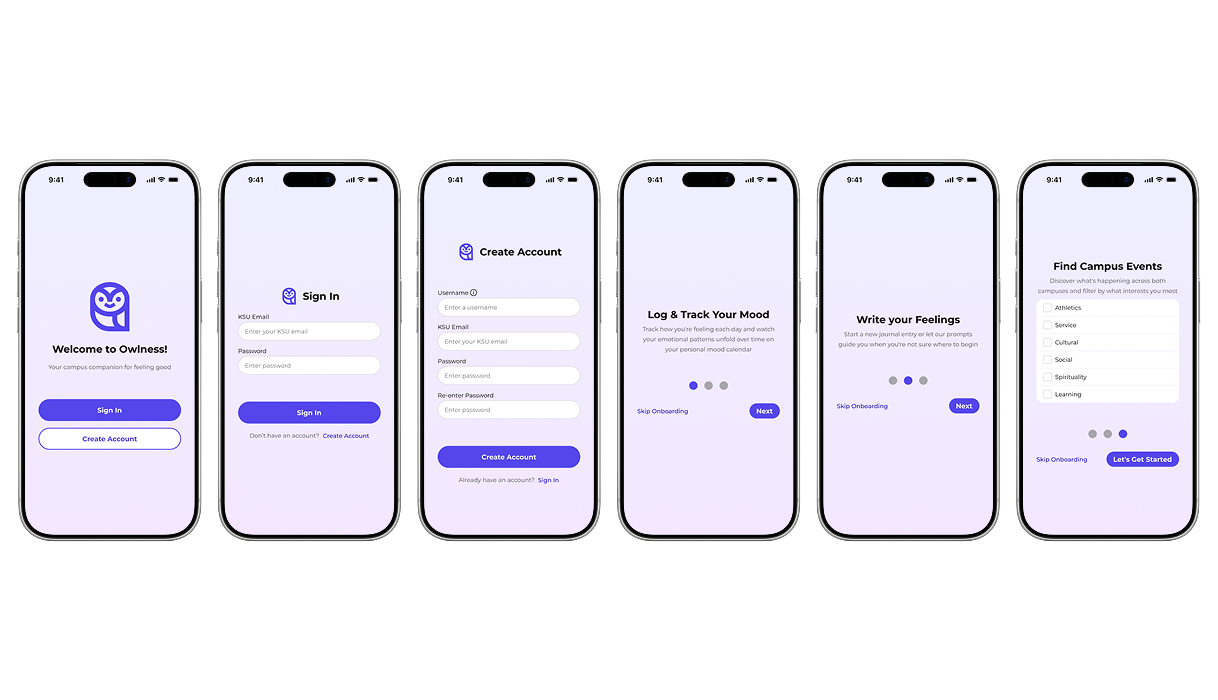
I redesigned the onboarding experience to better communicate the app's purpose and functionality. Changes included clearer sign-in instructions, a stronger value proposition, guided feature introductions, and an event-interest questionnaire that personalizes recommendations from the start.
Increased Access to Support Resources
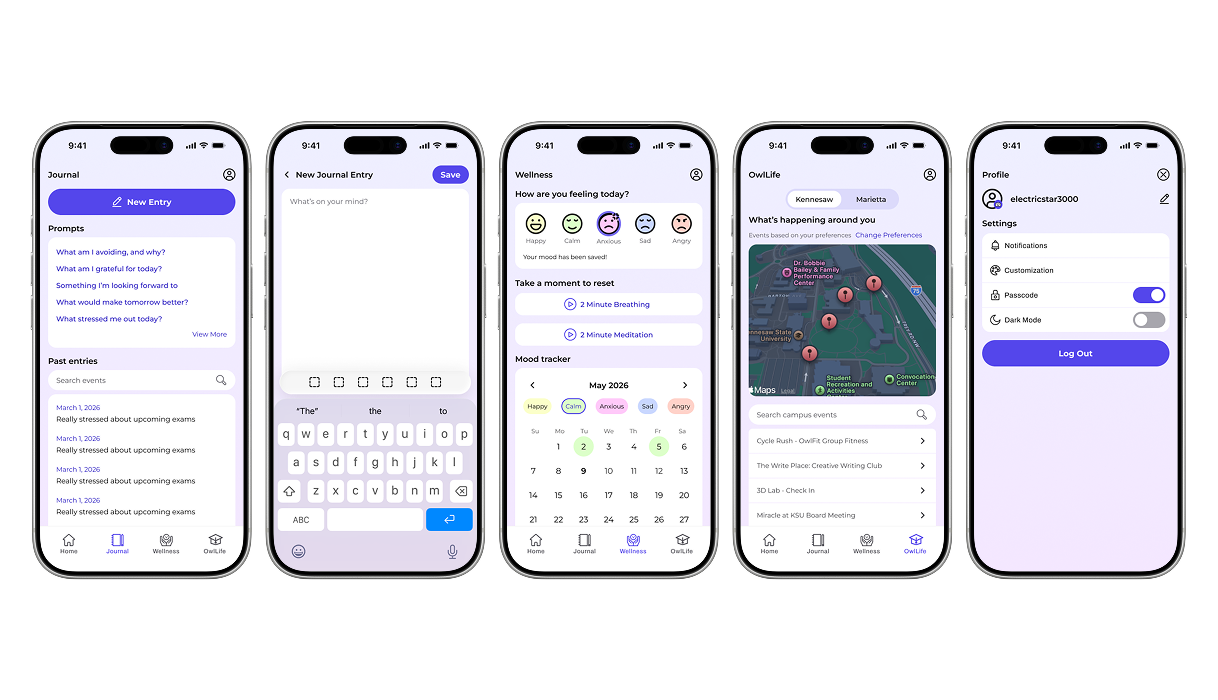
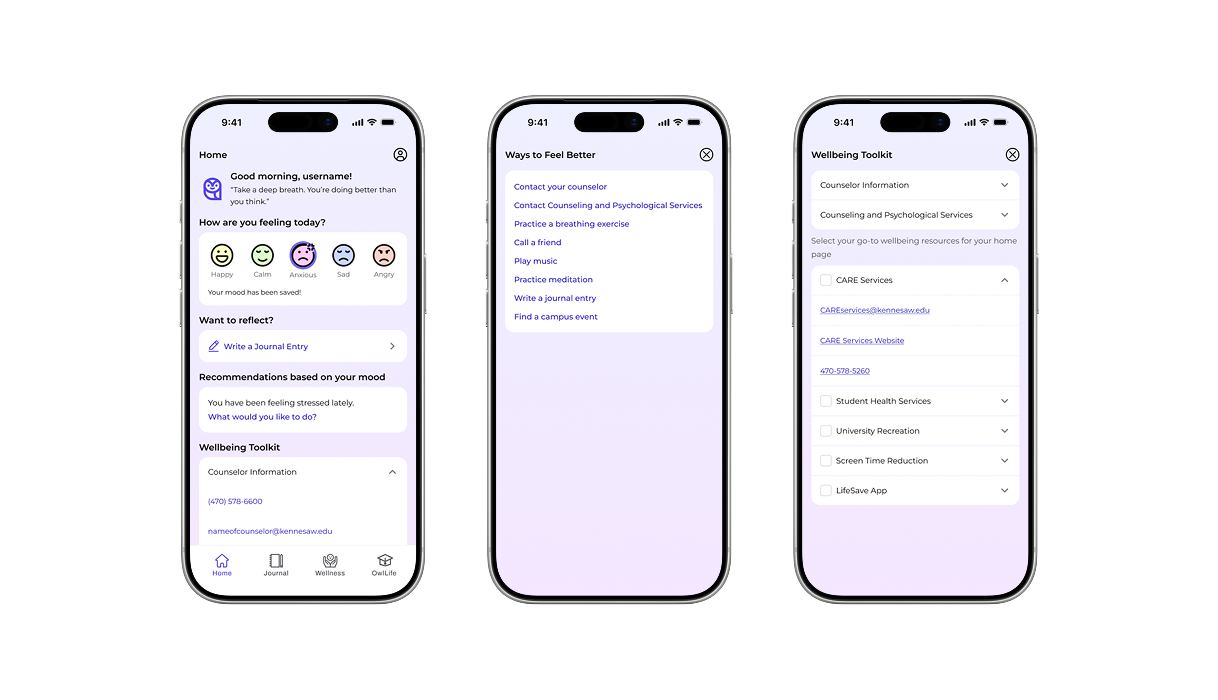
To address the most common usability issue, I introduced a Wellbeing Toolkit on the home page. This centralized counseling, medical, recreation, CARE, and other campus support resources in a highly visible location, making help easier to access when students need it. I also connected mood-tracking insights to relevant resources and coping strategies, helping users move from awareness to action.
Enhanced Existing Features
I improved the journaling experience by adding search functionality, reducing visual clutter, and refining the writing interface. Based on participant feedback, I also recommended redesigning the rich-text editor to better align with modern mobile note-taking experiences, including a formatting toolbar positioned above the keyboard for easier access while writing. I reorganized the wellness page to make breathing exercises and meditation techniques more discoverable and improved event exploration through search, filtering, and onboarding-based preference selection. I also standardized fonts, icons, and interface components to create a more cohesive design system across the application.